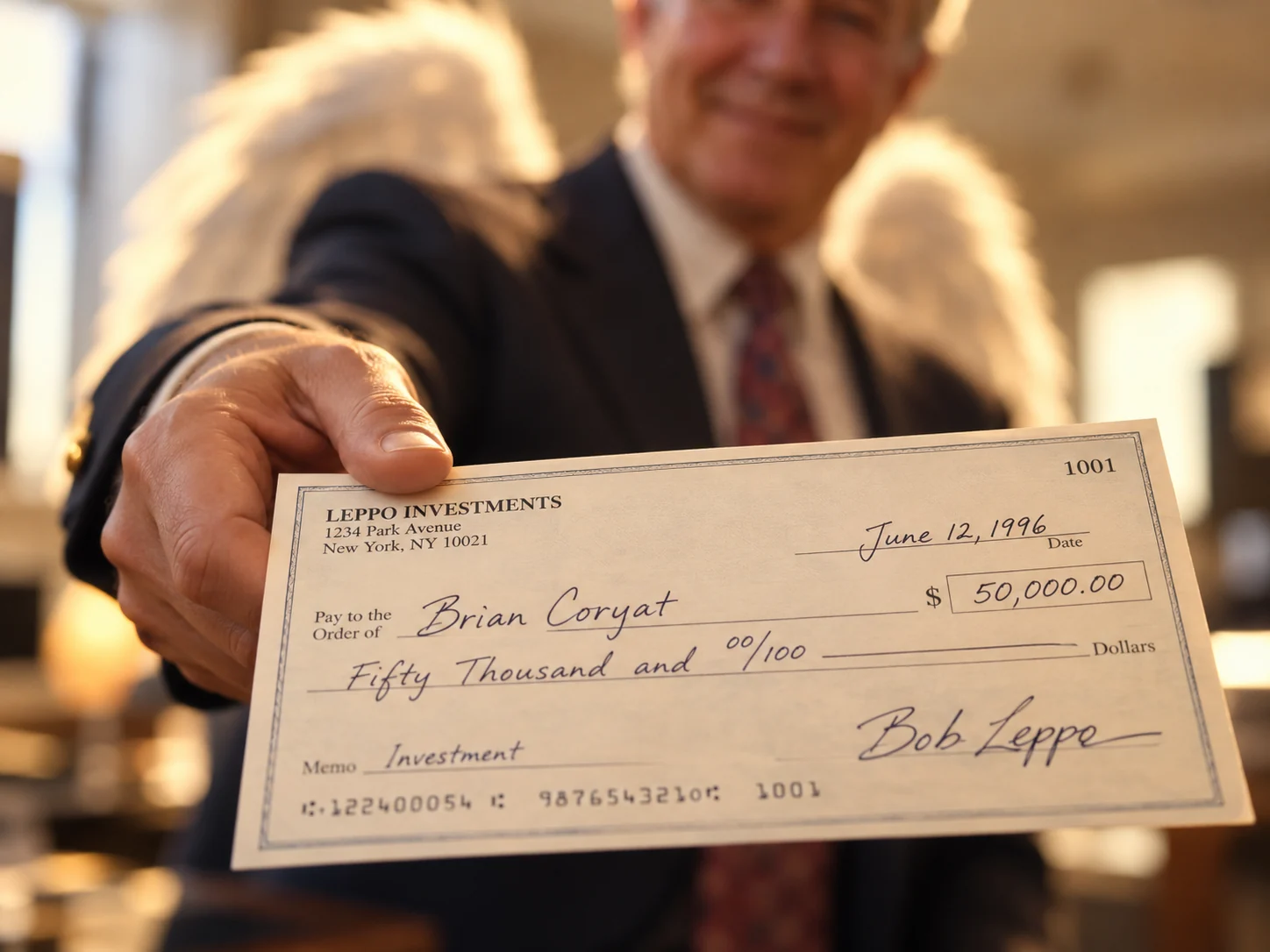
I used to think angel investors were motivated primarily by greed. Why else would someone who already had millions of dollars want to make even more?
It took becoming wealthy myself to realize how wrong I was.
I've spent much of my career on both sides of the table, raising money for my own companies, investing in startups, and advising entrepreneurs who are trying to raise capital. I've also been involved with angel investor groups, including the Santa Barbara Angel Alliance. One of the most important things I've learned is that understanding what motivates an angel investor can be just as important as having a great business idea.
What Is an Angel Investor?
An angel investor is someone who invests their own money in an early-stage business. Some invest on their own; others participate in angel groups. Many also bring experience, advice, and connections. For a founder, finding the right angel means finding someone who understands the business and wants to help it succeed.
What Really Motivates Angel Investors?
Early in my career, when I started pitching my companies to angel investors, I remember sitting across the table from multimillionaires and wondering to myself, why is this person sitting in an office talking to me? They could be on a beach somewhere, traveling the world, fly fishing, mountain climbing, or doing just about anything they wanted. Why were they spending their time listening to some entrepreneur pitch another startup?
Back then, I couldn't understand why someone who already had tens or even hundreds of millions of dollars would want to make more.
Later, I began to understand. Although I love surfing, fishing, diving, bike riding, hiking, and traveling the world, I've discovered that spending your life on vacation isn't all it's cracked up to be. It becomes empty pretty quickly.
I believe we all need a sense of purpose. We need to participate in this game called life, to play our roles and play them well. We need to serve. And I believe many successful entrepreneurs come to a similar realization once they've achieved their financial goals.
Most angel investors I've known are successful entrepreneurs themselves. They've built companies, created wealth, and experienced the tremendous challenges and rewards that come with entrepreneurship. Yes, they're interested in making more money. But for many of them, making money has become something of a game. They keep score with dollars and zeros, but that's not necessarily what gets them excited about investing in a startup.
What really excites them is the opportunity to be involved in building something. They understand how difficult it is to take an idea and turn it into a successful company that employs people, serves customers, and creates wealth. And they miss that excitement. They want to participate, advise, share what they've learned, and help another entrepreneur succeed.
There's also something else that motivates them, and I don't think it should be underestimated. Bragging rights.
Angel investors love talking to their friends and fellow investors about the companies they're involved with. They love discovering something exciting before everyone else. One of the strongest motivations I've seen among angel investors is FOMO, the fear of missing out. Imagine being able to say, "I was one of the first investors in Uber." That's a pretty good story to tell your friends.
Of course, investors want a financial return. But they also want something they can get excited about, something they understand, something they can talk about, and something they can help build. This is why I think it's important to find angel investors who are genuinely as excited about your company as you are. You don't just want someone willing to write a check. You want someone who wants to see your company come to fruition.
What Angel Investors Look for in a Founder
There's another important consideration. Angel investors aren't just evaluating your company. They're evaluating you.
In my experience, one of the first things angel investors look for is passion. They want to see that you've done your homework, that you understand your market, and that you're moving down the right path. But they also want to know whether you're coachable.
Many angel investors take tremendous pride in helping the companies they invest in. They want to offer advice, make introductions, and share the experience they've accumulated over their careers. I've found that the right angel investors can become incredibly valuable advisors over time. But they're a lot less likely to get involved if they think you're not willing to listen.
How to Find the Right Angel Investors
Once you understand what motivates angel investors, the next step is finding the right ones. I would start with personal introductions and angel investment groups.
A warm introduction from someone an investor knows and respects is far more valuable than an unsolicited pitch. If you know entrepreneurs who have raised angel capital, ask them about their investors. Find out who was helpful, who understood their business, and who they would recommend.
Angel investing groups are another excellent place to start. Whether you're approaching a group here in Santa Barbara or a larger network elsewhere, these groups bring together individuals who are interested in investing in early-stage companies. They provide opportunities to present your company to multiple potential investors, often through an organized screening and presentation process.
But I wouldn't approach an angel group simply hoping that a room full of investors will decide to fund your company. I'd approach it with a more specific goal.
Find the leaders.
In the angel investment groups I've been involved with, as in life, there are usually a few leaders and many followers. Learning to identify those leaders is a valuable skill. If I were approaching an angel group, I'd try to find out who the influential members are. Who gets mentioned most often? Whose opinions carry weight? Who has a history of leading investments and bringing other members along?
This is where finding a lead investor becomes so important.
Why a Lead Angel Investor Matters
I can't overstate the importance of finding one investor who becomes a genuine advocate for your company. Someone who gets excited enough about what you're building that they're willing to introduce you to their fellow investors, encourage them to take a meeting, and help you build momentum.
I've seen this happen again and again. One respected investor announces that they're putting $100,000 into a company. Another investor says, "Well, if he's in for a hundred, I'm in for fifty." Someone else says, "If he's in for a hundred, I'm in for two hundred."
Once a respected investor gets behind your company, other investors start paying attention. I've watched it happen many times. That's why I'd focus on finding the right lead investor rather than pitching everyone you can.
That first investor may sit in on another presentation, introduce you to colleagues, or simply put in a good word. Any of those can open doors.
But they're only going to do that if they believe in what you're building. You can't manufacture that enthusiasm. You have to earn it.
And that brings us to something I spend a great deal of time working on with founders.
How to Pitch Angel Investors
Every conversation you have with a potential investor should have a specific goal, and you should be prepared.
I've done a lot of pitch deck consulting over the years, and I keep coming back to the same two things: storytelling and simplicity. You need to be able to explain what your company does in layman's terms. I can't overstate that last point.
I've sat with technical founders, engineers, attorneys, and other brilliant people who have shown me their pitch decks. Sometimes just glancing at the first few slides gives me a headache. I don't understand what they're trying to tell me. My brain is working too hard. And if I'm having that experience, there's a good chance a potential investor will, too.
Remember, your initial goal isn't to explain everything about your business. It's to get someone excited enough to want to know more.
I think every founder needs to be able to tell their company's story in three ways: in a couple of sentences, in a couple of minutes (the elevator pitch), and in a 20-minute presentation with a slide deck. That's it. Everything beyond that becomes due diligence.
Let me give you an example.
Imagine Travis Kalanick, Uber's founder, attending a networking event in the early days of the company. Someone asks him what he's working on. He might have said something as simple as, "We've developed an app for your phone that's going to completely revolutionize the taxi experience."
That's it. Simple, understandable, and hopefully exciting.
The person listening doesn't need to know about the technology, the payment system, the business model, or how Uber recruits drivers. What you want is for that person to lean in and say, "Wow, that's interesting. Tell me more."
Now you've earned the opportunity to give your elevator pitch.
Imagine Travis continuing:
"For the first time in history, we're all carrying a communication device with maps and GPS in our pockets. Imagine a world where you could pull up an app and request a ride. One of our drivers accepts the request and comes to pick you up in a clean, normal car, not some worn-out yellow cab that stinks.
"You can follow the driver's progress on your phone and know exactly when they're going to arrive. The price is determined in advance, and when you reach your destination, you simply get out. No cash changes hands."
Now the person listening can visualize the experience. They understand the problem, they understand the solution, and they can begin imagining how big the opportunity might be. You haven't explained the technology or walked through a financial forecast. You've told a story.
And hopefully, the investor responds with something like, "That sounds really interesting. Do you have something you can send me?" Or better yet, "That sounds amazing. I'd like to introduce you to my partners. Can we set up a meeting?"
That's exactly what you want.
I look at the fundraising process as a series of conversations, each with a specific objective. The first couple of sentences should make someone want to hear your elevator pitch. The elevator pitch should make them want to sit down for a more serious conversation. That meeting might be an hour long and include a 20-minute presentation. And the goal of that presentation is to move the investor into due diligence.
You don't need to close the investment in that first conversation. You need to earn the next one.
Keep Your Pitch Deck Simple
I see founders make a common mistake with their pitch decks. They come to me with 40 or 50 slides, packed with text, technical explanations, financial projections, and everything else they can think of. It's too much.
I generally recommend that your presentation contain about 10 to 12 slides, certainly no more than 15. Those slides should tell the story of your company in simple, understandable terms. You can keep all the additional material. Just put it in an appendix at the back of your deck.
That way, when an investor asks a detailed question, you're prepared. For example, someone might ask, "Have you thought about the competition?" You can say, "Absolutely. Let me show you." Then you turn to slide 43 and walk them through your competitive analysis.
Now you're answering a question the investor actually wants answered, rather than forcing everyone in the room to sit through 43 slides before they understand what you're doing.
I like founders to have a presentation deck and a much more detailed set of supporting slides for questions and due diligence. The presentation tells the story. The supporting material demonstrates that you've done your homework.
Build an Investor Story That Makes Sense
There's another concept I think is particularly important during those first conversations. You want investors nodding their heads yes.
By that, I mean you want to build your story around things they already understand and believe.
Let's go back to Uber. If Travis started by saying, "Everyone hates the taxi experience," most investors would probably nod in agreement. They'd experienced it themselves. If he followed with a credible statistic about the number of taxi rides taken every day in New York City, the size of the opportunity might surprise them, but the underlying idea would be easy to understand.
Each point reinforces the previous one. You want the investor thinking, "Yes, that makes sense. Yes, I understand that problem. Yes, I can see why people would want this."
What you don't want is to introduce something so complicated or unbelievable that the investor stops listening and starts mentally questioning everything you're telling them. Once that happens, you've lost the momentum of your story.
This doesn't mean avoiding difficult questions or exaggerating the opportunity. It means presenting your company in a way that's clear, believable, and easy to follow. There's plenty of time for the technical details later.
From Investor Interest to Due Diligence
Ideally, one of those influential investors gets excited about your company and starts introducing you to others.
Sometimes they'll sit through your presentation again with those colleagues. Sometimes they'll simply make an introduction and let you take it from there. Either way, you've gained something much more valuable than another name on a list of potential investors. You've gained an advocate.
And when that advocate is respected by other investors, their enthusiasm can help you build the momentum you need to raise your round.
Find someone who believes in what you're building. Get them excited. Give them a reason to want to be part of it.
That's where it starts.
Once you've made it through those conversations and due diligence, and you have an investor ready to write a check, it's time to discuss valuation, terms, and the mechanism through which they'll make the investment. That's an entirely different subject, and one I'll cover in another article.